On October 14, 2026, the Ministry of Science and Technology issued Decision No. 4119/QD-BKHCN approving the Development Strategy of the Posts and Telecommunications Institute of Technology (PTIT) for the 2026–2030 period, with a vision toward 2045. This important decision outlines the strategic objectives, development orientations, and key measures aimed at transforming PTIT into a national leading higher education institution in engineering and technology, with a particular focus on digital technologies.
Under the approved Strategy, PTIT aims to become a specialized institution for education and research in science, technology, innovation, and digital transformation under the Ministry of Science and Technology, while strengthening its position within the regional and international higher education landscape.
By 2030, PTIT aims to rank among the top 350 universities in Asia, with selected disciplines reaching the top 200 in Asia. By 2045, the Institute aspires to have selected disciplines ranked among the top 100 worldwide.
Six Key Strategic Development Areas
The Development Strategy establishes 38 major performance indicators across six strategic areas:
1. Expanding Educational Capacity and Enhancing Training Quality
By 2030, PTIT aims to reach approximately 40,000 students and learners, including around 2,000 talented students, 2,800 Master’s students, and 400 doctoral candidates.
The Institute also plans to introduce and develop at least 20 new academic disciplines and programs, with 10–15 programs achieving international accreditation or meeting international standards.
Educational activities will increasingly emphasize research-based learning, practical training, project-based education, and solving real-world problems to meet the growing demand for highly qualified human resources.
2. Advancing Artificial Intelligence, Digital University Development, and Digital Transformation
Artificial intelligence (AI) is identified as a core capability and a key driver of PTIT’s future development and operations.
By 2030, the Institute aims to ensure that:
- 100% of courses are supported by digital learning materials and appropriate AI-powered teaching assistance tools;
- 100% of students have digital learning profiles and access to intelligent learning support tools;
- 100% of core administrative and management activities are digitalized.
These initiatives are intended to establish a modern, intelligent, and connected digital university ecosystem.
3. Strengthening Scientific Research, Innovation, and Knowledge Commercialization
Scientific research and technological innovation are identified as essential pillars of PTIT’s long-term development.
By 2030, the Institute aims to establish at least 10 strong research groups and 10 key specialized laboratories or research centers.
Other major targets include:
- An average of 1.0 international publication indexed in Web of Science or Scopus per scientific staff member, with 40% of publications in Q1/Q2 journals;
- At least 50 patents, utility solutions, and other intellectual property assets;
- Commercialization of approximately 20 technological products and platforms.
These objectives reflect PTIT’s commitment to strengthening research capabilities and translating scientific achievements into practical applications.
4. Developing Highly Qualified Human Resources and Modern University Governance
The Strategy emphasizes the development of highly qualified lecturers, scientists, experts, and management personnel.
By 2030, PTIT aims for more than 70% of its lecturers to hold doctoral degrees, while strengthening its capacity to attract leading domestic and international experts.
The Institute will also continue modernizing its organizational structure and management systems toward greater efficiency, flexibility, autonomy, and data-driven governance.
5. Modernizing Facilities, Research Infrastructure, and Digital Infrastructure
PTIT plans to develop new university campuses in Hanoi and Ho Chi Minh City while upgrading and restructuring its existing facilities.
Investment priorities include specialized laboratories, shared experimental and practical training centers, AI computing infrastructure, and digital university platforms.
These developments are intended to establish a modern, sustainable, and technologically advanced environment for education, research, and innovation.
6. Enhancing International Reputation and Global Integration
PTIT will strengthen international cooperation with leading universities, research institutes, technology corporations, and international organizations.
The Strategy emphasizes expanding international academic programs, student and faculty exchanges, collaborative research activities, and strategic partnerships to improve the Institute’s academic reputation and international standing.
Implementing the Strategy Through Education and Research
To achieve these objectives, the Strategy outlines key measures focusing on institutional and policy innovation, educational quality improvement, AI development and digital transformation, scientific research, technological innovation, human resource development, infrastructure investment, and international cooperation.
PTIT is responsible for developing action plans, translating strategic objectives into annual tasks and performance indicators, assigning responsibilities to individual units, and monitoring and evaluating implementation progress.
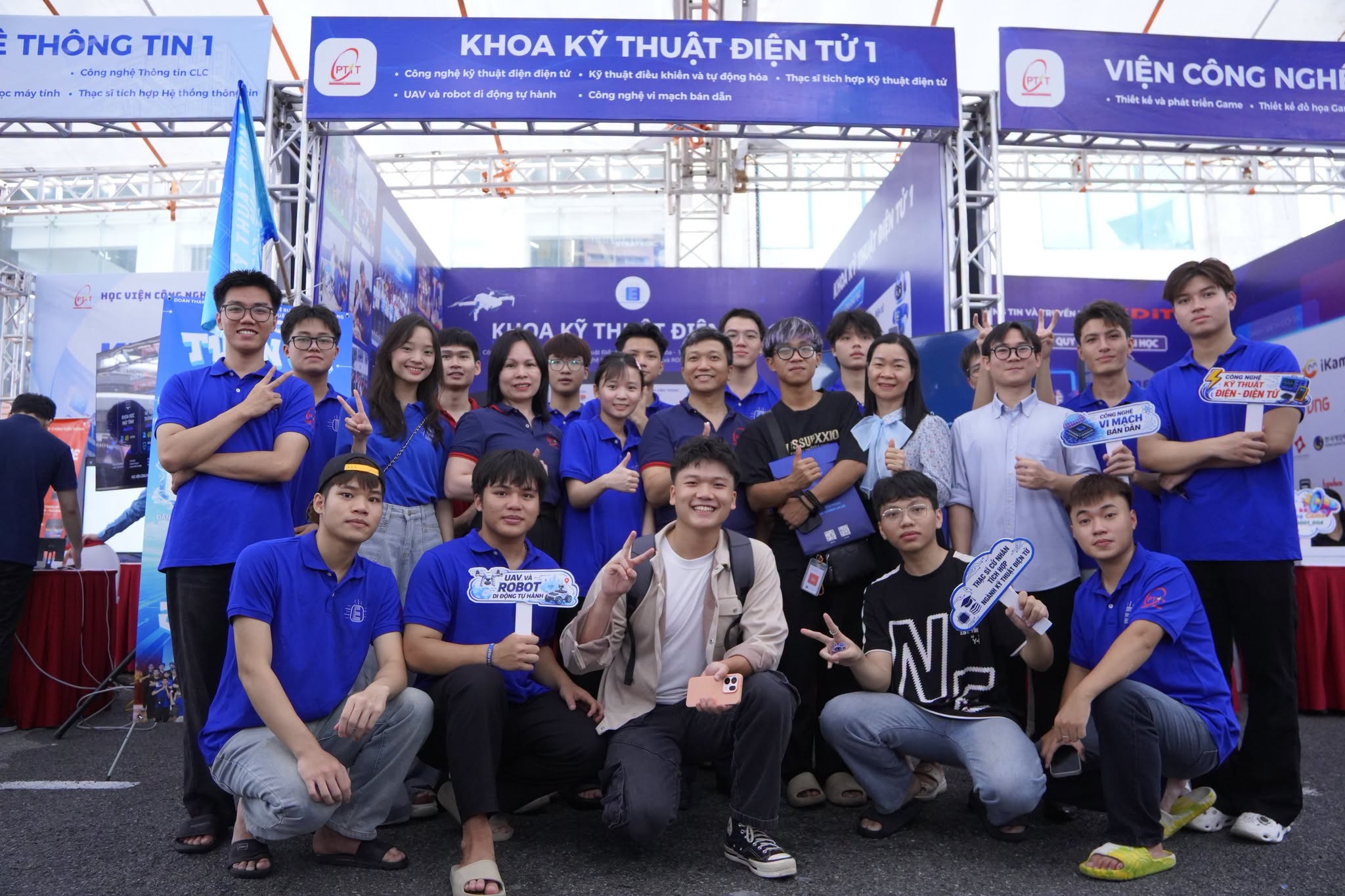
For the Faculty of Electronics Engineering 1, the Institute’s strategic orientations provide an important foundation for further improving educational quality, strengthening scientific research, developing highly qualified faculty members, and expanding cooperation with enterprises, universities, and research institutions in Vietnam and abroad.
By disseminating the Development Strategy, the Faculty of Electronics Engineering 1 seeks to ensure that lecturers, researchers, staff, and students are well informed about PTIT’s long-term objectives and development priorities. This will encourage greater engagement and a stronger sense of responsibility in teaching, learning, scientific research, and innovation.
The effective implementation of the Development Strategy for 2026–2030, with a vision toward 2045, is expected to contribute significantly to improving educational quality, strengthening research capabilities, and enhancing the position and reputation of the Posts and Telecommunications Institute of Technology in its next stage of development.
For further details, please refer to the full text of Decision No. 4119/QD-BKHCN dated October 14, 2026, issued by the Ministry of Science and Technology, including the Appendix outlining the 38 key strategic development indicators, here.